How to tell if your Houston pool is leaking
Every pool loses some water, so the real job is telling normal loss from a leak and knowing what a proper leak test involves.
October 27, 2026 · 4 min read
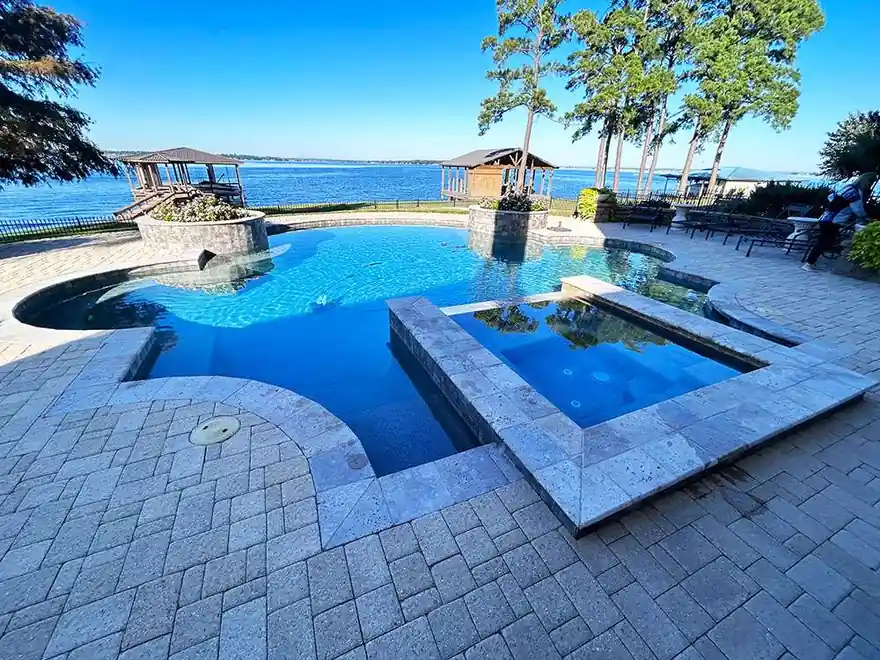
Every pool loses water. Sun and wind pull it off the surface, swimmers carry some out on their bodies, and backwashing the filter sends more down the drain. The question every owner eventually asks is whether the water they are losing is the normal kind or the kind that is going somewhere it shouldn't. In Houston, where a pool sits in shifting clay under hard sun, the answer is not always obvious. Below: the signs worth watching, a check you can run yourself, and what a proper leak test involves.
Signs that point to a leak, not evaporation
Evaporation is steady and follows the weather. A leak ignores the weather. These are the patterns that tend to separate the two.
- The level keeps dropping through cool, cloudy, calm stretches, when evaporation should be at its lowest.
- You are topping up much more often than you used to, or the auto-fill valve never seems to rest.
- Wet, soft or unusually green ground near the pool shell, the plumbing runs or the equipment pad.
- Cracks in the deck or the shell, or tile that has pulled away from the coping.
- Air bubbles streaming from the return jets, or a pump that loses prime and sounds like it is gargling.
- A level that falls to the same height every time and then stops. That points to something at that height, such as a skimmer throat, a light niche or a cracked tile line.
The bucket test you can run yourself
The bucket test separates evaporation from a leak using nothing but a bucket. Set it on a top pool step so the rim sits above the waterline, then fill it with pool water until the level inside matches the pool. Mark the inside level with tape and mark the pool level on the outside of the bucket. Leave the pump on its normal schedule and leave the bucket alone through at least one full day and night.
Compare the two marks. If the pool has dropped further than the bucket, water is leaving through something other than the surface. Run the test a second time with the pump switched off. If the loss slows or stops when the pump is off, the leak is more likely on the pressure side of the plumbing. If it keeps leaking with the pump off, the shell, the skimmer or the suction lines move up the suspect list. That is a clue, not a diagnosis, but it saves a technician from starting blind.
What a professional leak test involves
Guessing is expensive. Opening a deck to chase a hunch is how owners end up paying twice. A proper leak inspection works through the system in stages and rules things out, using methods that each answer a different question.
- Pressure testing isolates the plumbing. The technician plugs a line at both ends, pressurizes it and watches whether it holds. A line that loses pressure is leaking. A line that holds is cleared and drops off the list.
- Dye testing finds leaks in the shell and its fittings. Dye released near a suspect crack, skimmer joint, light niche or return fitting gets drawn toward the opening where water is escaping, so you can watch where it goes.
- Acoustic testing uses listening equipment to pick up the sound of water escaping a pressurized line, which helps place the problem under a deck or in the ground before anyone cuts anything open.
Sutton Pools uses pressure, dye and acoustic tests on its leak inspections. A pool can have more than one leak, so a good inspection does not stop at the first thing it finds.
The written report is the part that matters
Finding the leak is only half the job. What you do with the finding depends on what you are told about it. Each Sutton Pools leak inspection comes with a detailed written report covering the cause, the scope and the repair options. Those three things are what an owner or an HOA board needs to make a decision.
Cause tells you what failed and why. A fitting that let go, a line that aged out, a shell crack that opened as the ground moved: each has a different story and a different chance of coming back. Scope tells you if you are dealing with one fitting or a whole run of plumbing. Repair options tell you what can be done, so you are choosing between real alternatives rather than accepting the only one on offer. Houston clay shifts with the seasons and a pool is rigid, so whether movement is part of the cause changes how the repair is done.
What to do before anyone arrives
- Mark the water level with tape at the skimmer or tile line and note the date, so there is a record of how fast it is falling.
- Run the bucket test with the pump on and again with it off, and write down both results.
- Note whether the pump is pulling air, and keep it from running dry. A pump that runs without water can be damaged.
- Do not drain the pool to look for the leak. An empty shell can be pushed out of position by groundwater, and a drained pool is a bigger problem than the one you started with.
If the signs add up, call before the loss gets bigger. Sutton Pools' leak detection and repair service starts with the inspection and the written report, and quotes are free and carry no obligation. Call (281) 789-4584 and describe what you are seeing.
Sutton Pools, (281) 789-4584
Call (281) 789-4584More articles
Plaster, pebble or quartz: choosing a Houston pool finish
The finish is the part of your pool you touch, see and chemically stress every day, so the choice deserves more than a color swatch.
What Houston clay and heat do to pool tile, coping and decks
The edge of your pool is where soil movement, sun and water chemistry all meet, and it is usually the first place trouble shows.